

Executive Summary
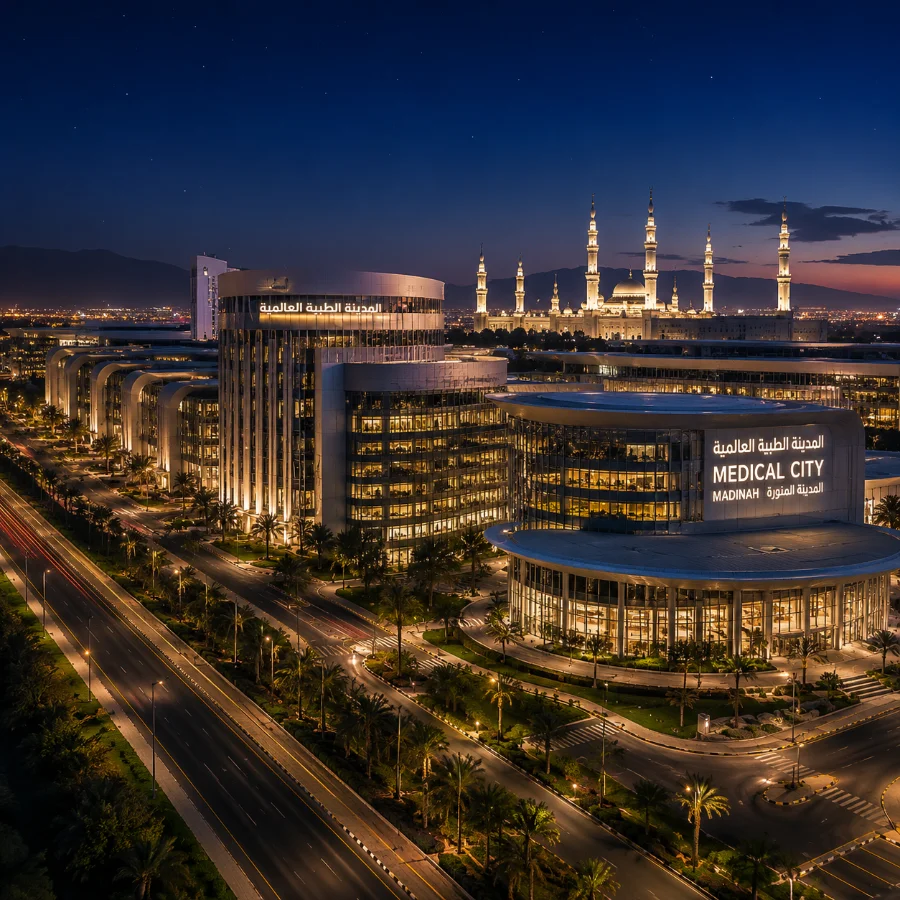
The Global Medical City in Madinah is an integrated healthcare project designed to become a regional hub for advanced healthcare, medical education, and scientific research. The development will comprise a flagship hospital with a targeted capacity of up to 1,000 beds, advanced specialty centers, a medical university, a conference and medical symposium center, as well as research and support facilities. All components will be developed within an advanced investment environment capable of being financed and implemented through a licensed Saudi partner within the Kingdom.
Key Project Components
Main Hospital
An integrated, multi-level care facility encompassing emergency services, intensive care, advanced surgery, and specialized cardiac, ophthalmology, and oncology units. The hospital is planned to accommodate up to 1,000 beds, supported by flexible infrastructure that allows for future expansion.
Specialty Centers
Advanced specialized units focusing on oncology, ophthalmology, autism, rehabilitation, stem cell therapy, mental health, and fertility. These centers will be equipped with modern diagnostic and therapeutic technologies, supported by specialized laboratories.
Medical University
A medical school offering comprehensive clinical and research training programs for students of medicine, nursing, and allied health professions, with opportunities for collaboration with international universities and research institutions.
Research and Development Facilities
Clinical laboratories and applied research centers supporting clinical trials, the development of advanced therapies, and medical innovation projects.
Conference and Symposium Center
World-class conference facilities designed to host medical events, scientific conferences, and workshops, enhancing Madinah’s position as a center for medical education and scientific exchange.
Supporting Services and Facilities
Medical and student housing, visitor and patient support centers, smart parking facilities, and integrated commercial and service areas.
Target Market and Value Proposition
Diverse Patient Base
The project will serve local residents, visitors and tourists, expatriate residents, and pilgrims performing Hajj and Umrah who require advanced medical services during their religious visits.
Economic and Healthcare Value
The project will enhance the quality of local healthcare, reduce the economic leakage associated with overseas medical referrals, and attract medical tourism through specialized and integrated healthcare services.
Strategic Location
Madinah’s strategic location, combined with substantial tourism and pilgrimage flows, provides a stable and diverse patient base throughout the year.
Operating and Financing Model
Licensed Local Partnership
The project will be implemented through a licensed Saudi partner, ensuring regulatory compliance and access to local and regional markets.
Flexible Financing Structure
The financing structure may combine long-term bank financing, strategic partnerships, equity contributions from local and international investors, and the potential issuance of sukuk or green bonds to finance a portion of the sustainable infrastructure.
Multiple Revenue Streams
Revenue will be generated through hospital operations and specialty services, education and training programs, research and development contracts, conference revenues, and healthcare hospitality services.
Competitive Advantages
Integration of Education, Research, and Healthcare
An integrated value chain connecting clinical training, innovation, and the practical application of advanced treatments.
Significant Capacity
A 1,000-bed hospital will provide substantial treatment capacity, address high-complexity healthcare demand, and complement the existing local healthcare supply.
Focus on Strategic Specialties
Centers specializing in oncology, stem cell therapy, and fertility will attract complex cases and position the project as a regional center of excellence and referral hub.
Platform for International Partnerships
The infrastructure will facilitate collaboration with leading global medical institutions and the implementation of academic exchange programs.
Mobile Healthcare and Telemedicine Program
The project will establish an integrated digital healthcare unit offering remote care and virtual medical consultations, supported by mobile clinic vehicles and follow-up services for patients in remote areas and for pilgrims and visitors during the Hajj and Umrah seasons.
This program will expand access to healthcare services, improve utilization of the hospital’s capacity, and create a recurring revenue channel through subscriptions and paid healthcare services.
Expected Returns and Proposed Performance Indicators
- Hospital occupancy rates, average length of stay, and revenue per available bed per day (RevPAR) as key operational performance measures.
- Clinical quality indicators, including surgical success rates, readmission rates, and oncology treatment outcomes.
- Research and education indicators, including the number of published studies, collaborative agreements, and graduate employment rates.
- Financial indicators, including the payback period, operating profit margin, and debt-to-equity ratio.
Proposed Next Steps
- Prepare a detailed feasibility study covering the clinical, economic, and environmental aspects of the project.
- Develop a preliminary architectural design and patient flow maps to accurately determine infrastructure requirements.
- Structure the partnership and financing arrangements with the licensed Saudi partner, including the allocation of ownership shares and responsibilities.
- Launch a plan to attract medical professionals and operational teams, as well as establish cooperation agreements with international institutions to accelerate capacity building and professional development.