

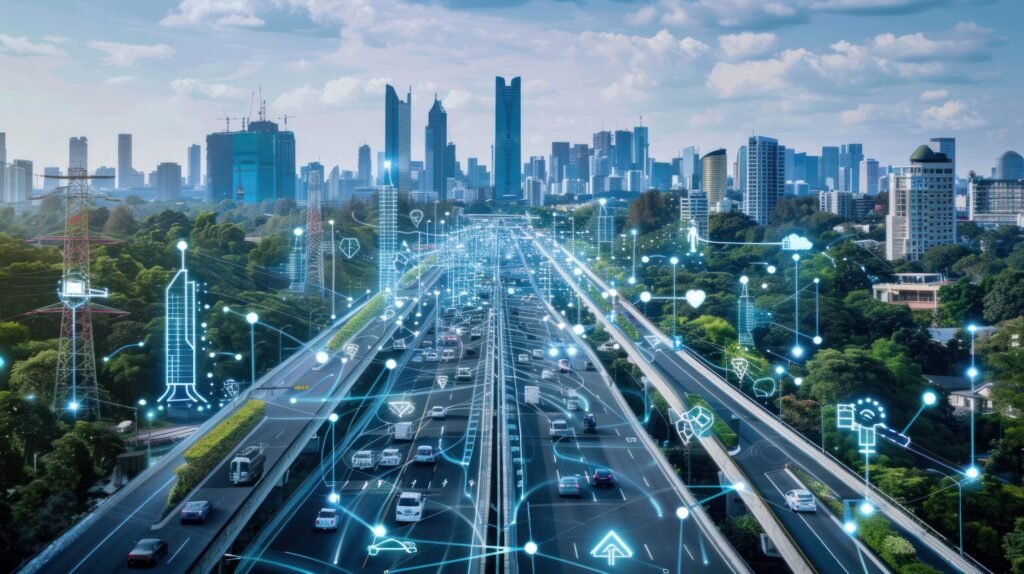
Smart Infrastructure: A Strategic Investment Opportunity for the Cities of the Future
Urban transformation over the past two decades has evolved far beyond the development of roads and electricity infrastructure. It now increasingly depends on digital platforms, sensitive data, and connected systems that make cities more efficient and sustainable. Smart infrastructure has become a key pillar for attracting significant capital because it combines stable returns with long-term technology-driven growth opportunities. This article explores why smart infrastructure deserves major investment, how it creates economic and social value, and the sectors and implementation strategies capable of attracting substantial financing.
Why Smart Infrastructure Is an Investment Opportunity
Stable, Long-Term Returns
Infrastructure projects—including smart electricity grids, intelligent public transportation, and advanced water networks—can generate predictable cash flows supported by government contracts or service fees. This makes them attractive to institutional investors and infrastructure funds.
Reduced Operating Costs
Digitalization and artificial intelligence can reduce waste and operating costs through improved maintenance and predictive failure detection, thereby increasing operators’ profit margins.
A Multiplier Effect on the Local Economy
Efficient infrastructure improves productivity, reduces travel times, and enhances a city’s attractiveness to both foreign and domestic investment.
Environmental Compliance and Sustainability
Clean energy projects and low-emission utilities are increasingly attractive to responsible investors and sustainability-focused funds.
Priority Sectors for Smart Infrastructure Investment
Smart Electricity Grids and Renewable Energy
The integration of renewable energy sources, energy storage, and intelligent grid management systems supports grid stability, enables more flexible consumption management, and creates revenue opportunities through balancing services.
Smart Urban Transportation
Traffic management systems, connected buses and trains, and on-demand mobility services can reduce emissions and improve transportation efficiency.
Smart Water and Wastewater Networks
Water-leak monitoring sensors, intelligent treatment systems, and consumption-management solutions help protect resources and reduce losses.
Digital Utilities and Telecommunications Infrastructure
Advanced towers, fiber-optic networks, and edge-computing platforms support smart-city applications and the Internet of Things (IoT).
Green Buildings and Mixed-Use Cities
Smart real estate developments that efficiently manage energy, water, and waste can provide connected and sustainable living experiences.
Mechanisms for Attracting Major Capital
Blended Finance Structures
Combining government and development-organization financing with private investment can reduce risk and make projects more attractive to pension funds and insurance companies.
Innovative Revenue Models
Revenue-sharing agreements, performance-based service fees, and Build-Operate-Transfer (BOT) or project-finance structures can provide investors with greater revenue visibility.
Guarantees and Political Risk Protection
Sovereign guarantees or political-risk coverage from multilateral institutions can help unlock new markets and attract international capital.
Flexible Public-Private Partnerships
Encouraging private-sector participation in the design, financing, and operation of projects—supported by transparent governance—can accelerate implementation.
Requirements for Successful Implementation
Integrated Digital Urban Planning
Centralized data platforms that enable information sharing among different sectors—including transportation, healthcare, and the environment—can improve policy and service coordination.
Clear Governance and Regulatory Frameworks
Data-protection laws, standardized performance-based contracts, and effective dispute-resolution mechanisms create greater confidence among investors.
Development of Local Capabilities
Training local talent, establishing local operating companies, and encouraging regional supply chains can increase project value and reduce reliance on external resources.
Measuring Sustainable Impact
Environmental and social performance indicators can demonstrate community benefits and help attract investment aligned with ESG standards.
Illustrative Examples of Successful Projects
Smart Electricity Grid
A smart grid project integrating wind and solar farms with energy-storage systems and operated through a public-private partnership can improve grid stability and reduce energy-import costs.
Intelligent Public Transportation System
A smart transportation system integrating digital ticketing, AI-powered traffic management, and data analytics for route planning can reduce travel times and improve citizen satisfaction.
Risks to Be Managed
Technology Risks
Cybersecurity breaches and system incompatibility require substantial investment in cybersecurity, interoperability, and technical standards.
Financing Risks
Large-scale projects require long-term financing solutions and may be affected by fluctuations in interest rates.
Political and Regulatory Risks
Changes in government priorities or weak governance can delay project implementation or negatively affect expected returns.
Brief Conclusion
Investment in smart infrastructure combines long-term stability with growth opportunities driven by digitalization and innovation. With flexible financing structures, clear governance, and integrated digital planning, cities can become productive platforms capable of attracting major capital and building the economy of the future.